
Ever stared at a recipe and felt your brain short-circuit because it said 175°C, and your oven only speaks in Fahrenheit? Yeah… me too. It’s like the universe suddenly decided to speak a language your kitchen gadgets didn’t understand. But don’t worry, we’re gonna make sense of this together, and maybe even have a lil fun while we’re at it.
Temperature is funny that way. You never really notice it until you need it. Like, you know water boils at 100°C or 212°F, but when it’s 175 degrees and you’re trying to bake that chocolate cake for your niece’s birthday, suddenly every number matters.
So, let’s unpack 175 degrees Celsius in Fahrenheit and why knowing it is more useful than just memorizing a random number.
| Celsius (°C) | Fahrenheit (°F) | Notes |
|---|---|---|
| 0°C | 32°F | Freezing point of water |
| 100°C | 212°F | Boiling point of water |
| 175°C | 347°F | Common baking temperature |
| 180°C | 356°F | Slightly hotter baking temp |
| 200°C | 392°F | Roasting or baking pizza |
Understanding Celsius vs Fahrenheit
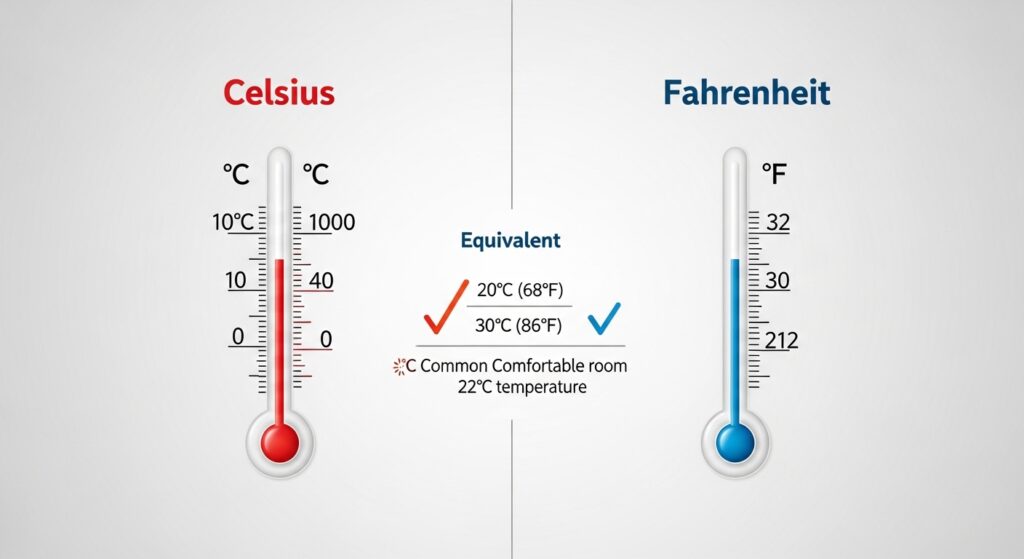
Before we go straight to the answer, lemme tell you a little story. Back in the day, my grandma used to shout “Set it to 350!” while waving her wooden spoon around, never telling me if it was Celsius or Fahrenheit. That’s because she cooked with Fahrenheit in the States, while I’d learned about Celsius in school. Confusing, right?
Here’s the deal:
- Celsius scale is part of the SI system (International System of Units) and is more commonly used around the world. Water freezes at 0°C and boils at 100°C. Pretty neat.
- Fahrenheit scale is part of the Customary system (mostly USA). Water freezes at 32°F and boils at 212°F.
So, they both measure the same thing temperature but in different “languages.” And like translating languages, you need a formula.
The Formula: Converting °C to °F
Now, I know math makes some people shiver like they’re at 32°F, but don’t panic. The °C to °F formula is straightforward:
°F = (°C × 9/5) + 32
Let’s plug in 175°C because that’s the star of our story.
Step by step (because precision matters):
- Multiply 175 × 9/5.
- 9/5 is 1.8, so 175 × 1.8 = 315
- Add 32 to that.
- 315 + 32 = 347
Boom! 175°C = 347°F. There you go. Your oven can now understand you. 🎉
It’s kinda like magic, isn’t it? Turning one number into another just by a little math sprinkle.
Why 175°C Is a Popular Cooking Temperature
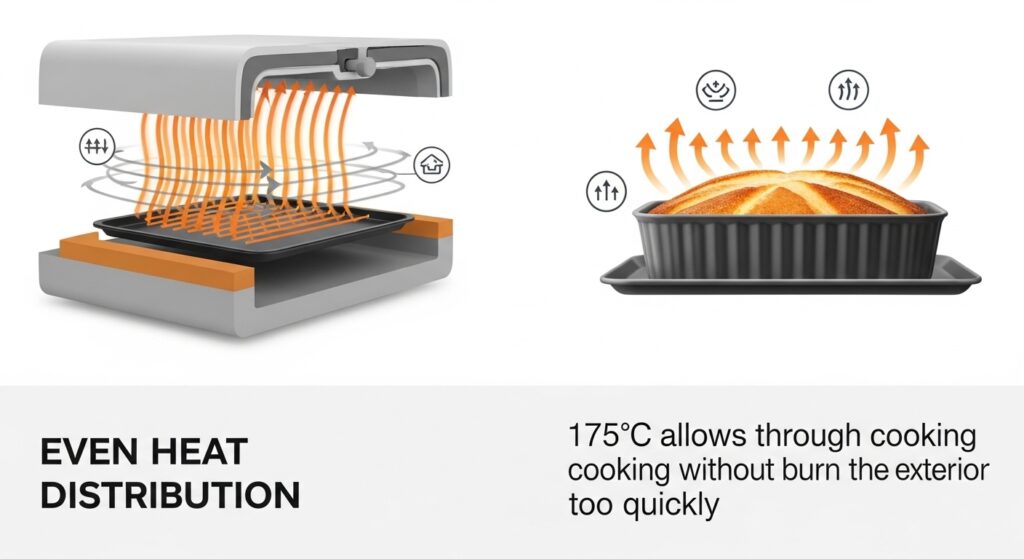
Now, this isn’t just numbers talk. 175°C / 347°F is kinda famous in the baking world. People love it because it’s not too hot, not too cold—it’s Goldilocks temperature for cakes, muffins, and most pastries.
- When you bake a sponge cake at 175°C, it cooks evenly without burning the edges.
- Roast chicken at 175°C? Juicy inside, crisp outside.
- Cookies? Perfectly golden brown.
A little tip: If your oven doesn’t have exact settings, an easy-to-use conversion tool or a thermometer can save you from disasters. Trust me, I’ve burned a pie trying to guess Fahrenheit equivalents once… never again.
Fun Analogies to Remember the Conversion
Sometimes memorizing formulas is boring. Let’s spice it up:
- Think of 175°C as a “friendly hot bath” while 347°F is like that same bath in another country where the thermometer only speaks weird numbers.
- Celsius is like speaking English; Fahrenheit is like speaking French but for temperatures. Same weather, different accents.
- Or imagine your oven has feelings: 175°C makes it sing softly, 347°F makes it whistle happily.
Common Temperature Conversion Confusions
Even pros mess up sometimes. Here are a few classic blunders:
- Thinking 175°C is close to 175°F. Nope. That would be barely warm, like 79°C too low.
- Forgetting to add 32 after multiplying. That small step makes a big difference, especially in baking.
- Assuming Fahrenheit is always bigger. Not true for negative temps! For example, -10°C = 14°F. Crazy, right?
An interactive temperature calculator is your best friend if numbers aren’t your thing. Just type in °C and watch it transform magically to °F.
Read this Blog: https://nexovates.com/what-is-170-degrees-celsius-in-fahrenheit/
Practical Tips for Cooking & Baking
Now that you know 175°C = 347°F, how can we make this useful in real life?
- Invest in a thermometer: Sometimes your oven dial lies. A real thermometer shows true temperature, whether Celsius or Fahrenheit.
- Use conversion charts: Print a small one and stick it on your fridge. Your future self will thank you.
- Adjust for altitude: High altitudes can change baking times. Temperature conversion still works, but cooking times might need a tweak.
- Don’t stress exactness: 345°F or 350°F won’t ruin your recipe. Baking’s part science, part magic.
Temperature Conversion Beyond Cooking
Temperature conversions aren’t just for your kitchen. Scientists, engineers, and travelers deal with them all the time:
- Boiling point of water: 100°C = 212°F
- Freezing point: 0°C = 32°F
- Weather: Europeans check Celsius, Americans Fahrenheit.
Knowing 175°C to °F might help you not only bake a cake but also understand weather forecasts in another country, calibrate lab experiments, or even explain temperatures in a science class.
Cultural Notes: How People Handle Temperatures
Interestingly, different cultures approach temperatures differently:
- In Japan, ovens often show Celsius only. Baking recipes sometimes need conversions for imported books.
- In the US, almost every kitchen gadget speaks Fahrenheit. Some new gadgets offer both scales thank goodness for that.
- In Europe, oven temperature conversion is a common thing when swapping recipes from cookbooks across countries.
Even a small misunderstanding like misreading Celsius vs Fahrenheit can turn a delicate soufflé into an unplanned pancake.
Creative Ways to Remember 175°C in Fahrenheit
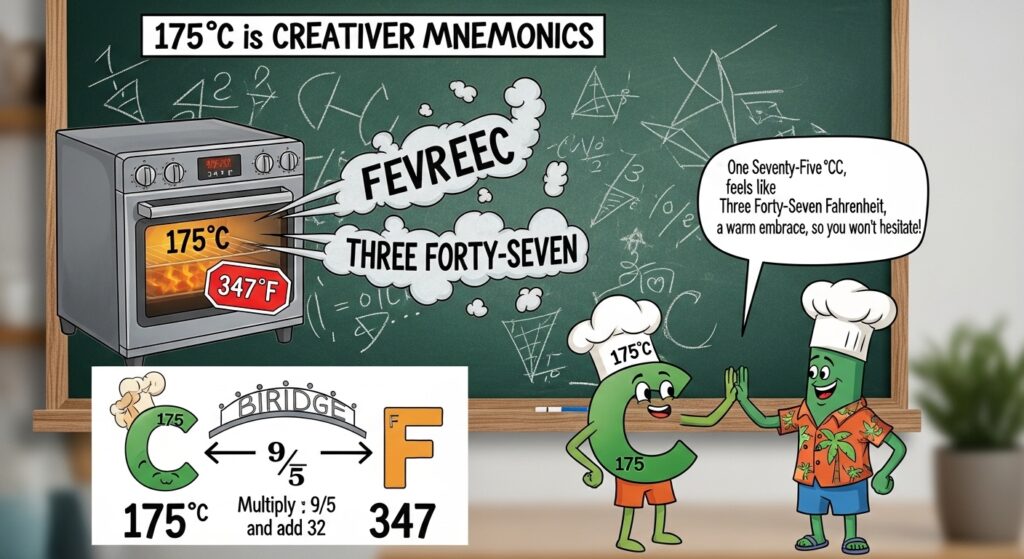
Let’s make it stick in your brain:
- Rhyme it: “175°C, 347°F, baking’s sweet relief.”
- Visualize it: Picture 175°C as a warm sunny day, 347°F as the same sunny day in Fahrenheit city.
- Story method: Imagine your cake hopping from Europe (Celsius land) to the US (Fahrenheit land), it tells the oven: “Hey, I’m 175°C here, I’m 347°F there.”
Your brain loves stories more than formulas so this trick works surprisingly well.
Frequently Asked Questions
175 c to f
175°C is equivalent to 347°F.
175 celsius to fahrenheit
Converting 175 degrees Celsius to Fahrenheit gives 347°F.
what is 175 celsius in fahrenheit
175°C equals 347°F on the Fahrenheit scale.
175 derece kaç fahrenheit
175°C is 347°F when converted to Fahrenheit.
175c to f oven
For oven settings, 175°C is the same as 347°F.
Conclusion: Making Numbers Human
At the end of the day, 175 degrees Celsius in Fahrenheit isn’t just a number it’s a bridge. A bridge between countries, cultures, and kitchens. It’s the difference between a cake rising perfectly or collapsing in despair.
Math and science sometimes feel cold and rigid, but if you wrap it in stories, anecdotes, and little quirks, numbers like 175°C = 347°F start to feel alive. Next time you read a recipe, glance at a weather report, or explain science to someone, you can sprinkle a little narrative magic on it.
And remember: cooking, baking, and life are full of small conversions some literal, some metaphorical. Take your time, embrace the difference between Celsius and Fahrenheit, and maybe, just maybe, sing to your oven while it warms up to 347°F.

