
Ahhh, temperature. It’s one of those sneaky things that can be both super simple and bewildering at the same time. Like, you’ve probably been there, staring at a recipe, squinting at “Bake at 175 degrees Celsius” and thinking, wait…
how hot is that actually? Is it like, boiling hot or just pleasantly warm? Well, my friend, you’re about to embark on a lil’ journey of heat, math, and some quirky, heartwarming metaphors that’ll stick with ya.
Before we get all number-y, lemme tell ya, there’s something kinda poetic about temp conversion. You’re basically translating one language into another, like if Celsius was French and Fahrenheit was Italian, and your oven is the confused tourist trying to figure out where the heck to go.
| Celsius (°C) | Fahrenheit (°F) |
|---|---|
| 0 | 32 |
| 100 | 212 |
| 175 | 347 |
| 200 | 392 |
| 212 | 414 |
Understanding the Basics: Celsius vs Fahrenheit
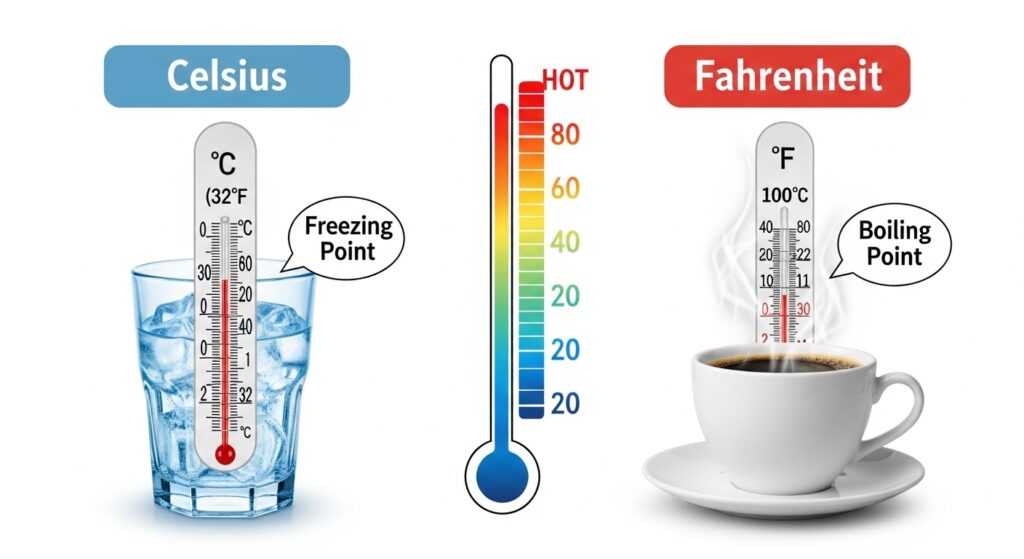
Okay, so first things first. Let’s talk Celsius scale and Fahrenheit scale. In short, these are both ways humans figured out to measure how hot or cold stuff is, but they do it in slightly diff ways. Celsius, part of the SI system, is all logical and neat: water freezes at 0°C and boils at 100°C. Beautiful, right? It’s like math poetry.
Then comes Fahrenheit, the old-school customary system favorite. Water’s freezing point there is 32°F and boiling point hits 212°F. Random much? Yeah, some people say so, but hey, it works. Both are kinda arbitrary if you think about it… someone just said, “Let’s pick numbers that feel right,” and boom, we got scales.
The magic happens when you try to switch between ‘em. That’s called temperature conversion. It’s not rocket science, but if numbers ain’t your jam, it can feel like trying to juggle flaming marshmallows.
The Conversion: 175°C in Fahrenheit
Alrighty, let’s roll up our sleeves. You wanna know what 175 degrees Celsius is in Fahrenheit? Well, there’s a lil’ formula for that, a sort of secret handshake between the SI system and customary system:
°F = (°C × 9/5) + 32
So if we do it step by step:
- Multiply 175 by 9 → 175 × 9 = 1575
- Divide 1575 by 5 → 1575 ÷ 5 = 315
- Add 32 → 315 + 32 = 347
Boom. There you have it: 175°C = 347°F.
See? Not scary at all, just a lil bit of number magic. Now you can impress your friends, or more importantly, cook that cake without fear of underbaking it.
Why Knowing Temperature Conversion Matters
You might be thinking, “Okay, big whoop, I can now bake in Fahrenheit. Why else?” Well, turns out temp conversion is sneaky important in lotsa situations:
- Cooking and baking recipes from around the world. Ever tried a French soufflé? If you miss the temp, it collapses faster than my motivation on a Monday.
- Science experiments. Seriously, chemistry teachers get really, REALLY mad if you mix Celsius and Fahrenheit in one lab.
- Travel. Hot summers in Texas or cold winters in Canada? You gotta know if your thermometer’s telling the truth.
And yes, even though most of the world uses the metric system, the non-metric system still pops up, mostly in the US. So being able to switch between these scales is kinda like having a secret superpower.
Fun Analogies: Making Sense of 175°C

Sometimes, numbers are dry, right? Let’s give 175°C / 347°F a personality. Imagine a loaf of bread waking up in the morning: it’s not screaming hot like boiling point of water, but it’s not shivering like it’s at the freezing point of water either. It’s that cozy, golden-brown warmth that makes you wanna hug it before it goes into the oven. That’s 175°C.
Or picture a cozy fireplace room. The air feels warm but not “sweat on your forehead” hot. That’s roughly what 347°F feels like. You could safely stand next to it, sip cocoa, maybe read a book… just don’t actually put your hand in the oven. Trust me on this.
Handy Tools for Temperature Conversion
Okay, math aside, not everyone wants to do step-by-step formulas (and honestly, no shame). That’s where interactive tools and conversion calculators come in handy. A couple clicks and voilà, you got your Celsius to Fahrenheit conversion or Fahrenheit to Celsius conversion done instantly.
Some tips for using these tools:
- Look for easy-to-use online calculators with big numbers. Tiny fonts = stress.
- Many sites also give you a mini chart of common temperatures, like 100°C, 150°C, 200°C. Super useful for cooking.
- Some apps let you save your favorite temps, which is surprisingly satisfying. It’s like having a personal weather assistant in your pocket.
Pro tip: even with calculators, it’s smart to have a mental ballpark. Like knowing that 0°C = 32°F, 100°C = 212°F… then you can eyeball 175°C as “oh, yeah, kinda hot but not boiling.”
Cultural Quirks in Temperature Scales
Did you know different countries have their own quirky ways of thinking about heat? In Germany, they love Celsius, obviously. But in some old American cookbooks, temps are written in “moderate oven” or “slow oven” instead of numbers.
You basically had to guess. My grandma always said, “Just stick your hand in and see if it feels like summer or winter.” I don’t recommend that approach ouch but it’s funny.
Even more fun, in some Caribbean islands, locals measure oven heat by smell or color of the flames. So you see, unit conversion isn’t just nerdy math—it’s cultural anthropology disguised as cooking.
Practical Tips for Converting Temps in Daily Life
So now you know 175°C = 347°F, but how do you make this useful beyond baking? Here’s a few lil’ life hacks:
- Sticky Note Hack: Write a small chart of common temps in both scales and stick it near your stove. Instant genius points.
- Smartphone Assistant: Most smartphones have built-in calculators that can handle the formula. Just type “convert 175 Celsius to Fahrenheit” and boom.
- Visual Memory: Remember water boils at 100°C / 212°F and freezes at 0°C / 32°F. Then every other temp falls in place easier than you think.
- Round Numbers for Quick Estimates: If you’re like me and hate decimals, just round 347°F to 350°F when cooking. Oven won’t judge.
The Beauty of Temperature Scales
Here’s the thing: whether you use the Celsius scale or Fahrenheit scale, it’s all just humans trying to make sense of the invisible energy swirling around us. There’s a weird beauty in that.
You’re literally holding the knowledge of molecular movement in your brain when you understand that 175 degrees Celsius is 347°F. Mind-blowing when you think about it.
And there’s a kind of shared universality too. Everyone, no matter where they live, can relate to hot soup, icy water, or a perfect golden-brown cake. It’s science, math, and emotion all rolled into one.
Read this Blog: https://nexovates.com/celsius-in-fahrenheit/
Frequently Asked Questions
175 celsius to fahrenheit
175°C is equal to 347°F. You can convert it using the formula °F = (°C × 9/5) + 32.
what is 175 celsius in fahrenheit
175 degrees Celsius converts to 347 degrees Fahrenheit. This is the equivalent temperature on the Fahrenheit scale.
175 derece kaç fahrenheit
175°C equals 347°F. “Derece” means degree, so it’s the same Celsius-to-Fahrenheit conversion.
175c in fahrenheit
175°C is 347°F. Multiply by 9/5 and add 32 to get Fahrenheit.
175c to f oven
If your oven temperature is 175°C, set it to 347°F for Fahrenheit-based ovens. This ensures the same cooking temperature.
Conclusion: Your Oven, Your Rules
So next time you see 175°C in a recipe, don’t panic. You’ve got this. Whether you bake in Fahrenheit, measure in Celsius, or just eyeball it like a pro chef, the important thing is enjoying the process. Knowing the conversion 175°C = 347°F is just one small part of a bigger dance between numbers, senses, and delicious results.
And if you’re feeling fancy, make a lil’ cheat sheet for yourself with other conversions: 150°C, 200°C, etc. Soon, you’ll be a human conversion calculator, impressing friends, family, and anyone who dares to ask “how hot is that, really?”
Remember: math can be warm, temperatures can be cozy, and numbers, sometimes, tell stories too. Now, go forth and bake, cook, or just marvel at the universe’s quirky obsession with degrees.

