
There’s something oddly mesmerizing about a beverage can, don’t y’think? You pick it up, feel the sleek can’s cool aluminum surface, hear that subtle pop of carbonation escaping like tiny celebratory fireworks, and suddenly, you realize it’s more than just a container.
It’s a miniature marvel of beverage engineering, designed with precision that often goes unnoticed. I remember once, at a small craft brewery in Vermont, staring at a row of Tall Boy Beer cans, thinking, “Who actually decides that the height of a can should be exactly 7 10/16 in?”
Turns out, it’s a mix of ergonomics, packaging logistics, and a dash of pure design obsession. And yes, it’s perfectly normal to geek out over metal containers if you care about things like height-diameter correlation and end size (top/bottom diameter).
In this guide, we’re diving deep into every nook and cranny of beverage can dimensions, exploring everything from materials like aluminum and tin-plated steel, to how carbonated soft drinks and functional beverages get their perfect fit in your hand. By the end, you’ll see cans in a whole new light – not just as holders of Red Bull or White Claw, but as tiny feats of science and art.
| Can Type / Beverage | Volume | Height (in) | Diameter (in) | Material | Notes |
|---|---|---|---|---|---|
| Mini Can | 6.75 oz (200 ml) | 3.4 | 2.06 | Aluminum | Small carbonated soft drinks |
| Standard Soda | 12 oz (355 ml) | 4.83 | 2.13 | Aluminum | Most common soda / juice can |
| Energy Drink | 8.4 oz (250 ml) | 5.0 | 2.1 | Aluminum | Red Bull, Monster (smaller versions) |
| Monster Can | 16 oz (473 ml) | 6.2 | 2.6 | Aluminum | Standard Monster Energy Drink |
| White Claw | 12 oz (355 ml) | 5.875 | 2.125 | Aluminum | Hard seltzer |
| Tall Boy | 24 oz (709 ml) | 7.5 | 3.0 | Aluminum | Big beer / craft beer servings |
| 24 oz Beer Can | 24 oz (709 ml) | 7.5 | 3.0 | Aluminum / Steel | Common Tall Boy style beer |
Understanding Can Sizes: Not All Cans Are Created Equal
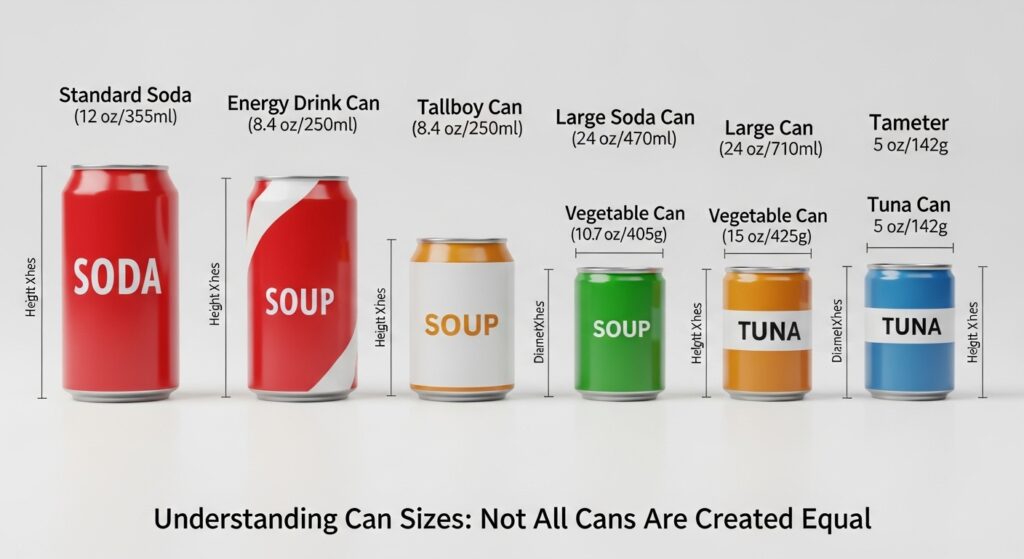
Cans might seem uniform at a glance, but boy, the variety is staggering. You got your standard can, typically 12 oz (355 ml), which is what most people reach for when they want a cold soda or a nutritional supplement drink.
Then there’s the Tall Boy Beer, at a generous 16 oz (473 ml) or even 24 oz (709 ml) for those who like to go big. Smaller cans, like the 6.75 oz (200 ml) or 8 oz (236 ml), are perfect for sampling or energy drinks like Monster Energy Drink, where the punch of caffeine and taurine is mighty but the volume is modest.
The height of these cans can range from 3 7/16 in to 7 10/16 in, and the diameter from 2 1/16 in to 3 in. It’s amazing how such small differences in dimension can affect everything from finger feel / hand ergonomics to packaging & logistics. I mean, if you’re trying to stack a 24-pack case of craft beer, the last thing you want is a can that’s just a smidge too tall, throwing off your entire shelf appeal.
Material Matters: Aluminum vs Steel vs Tin-Plated Steel
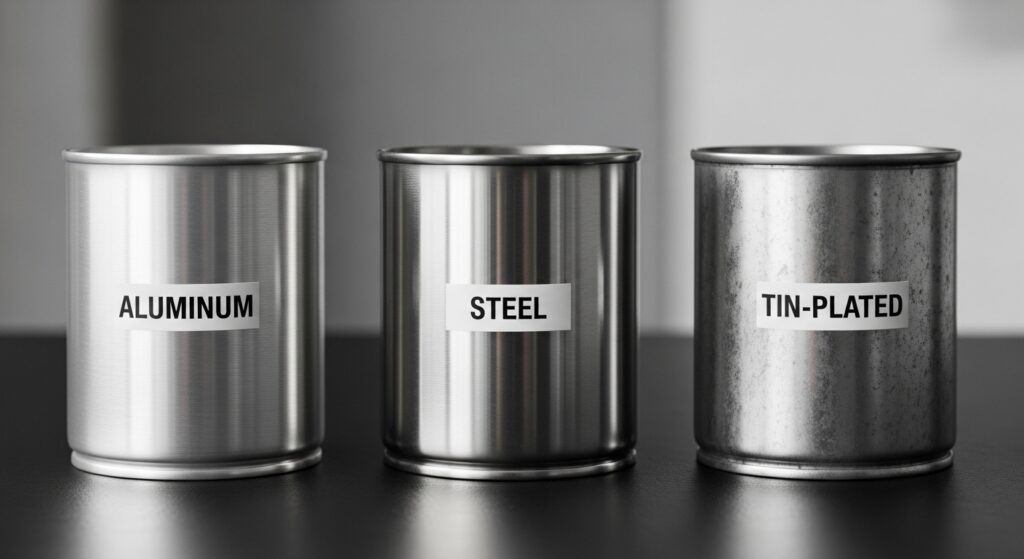
Cans are not just hollow tubes; they are a dance of materials science. Most carbonated soft drinks and flavored waters come in aluminum, because it’s lightweight, easily recyclable, and gives that satisfying “pop” when opened. Steel and tin-plated steel still show up in some functional beverage packaging and older alcoholic beverages, prized for durability and resistance to dents.
Aluminum cans are like the athletes of the beverage world lightweight, fast to cool, easy to transport. Steel cans are the heavyweights tough, reliable, maybe not as glamorous, but they get the job done.
Fun fact: the end size (top/bottom diameter) of aluminum cans is often 200, 202, 206, or 209 mm, which matters a lot when you’re optimizing shipping and stackability. Manufacturers sweat over these numbers like a chef over a souffle, and the results are everywhere: from your White Claw can: 3960 ml, 350 g to your everyday soda.
Beverage Types and Their Can Dimensions
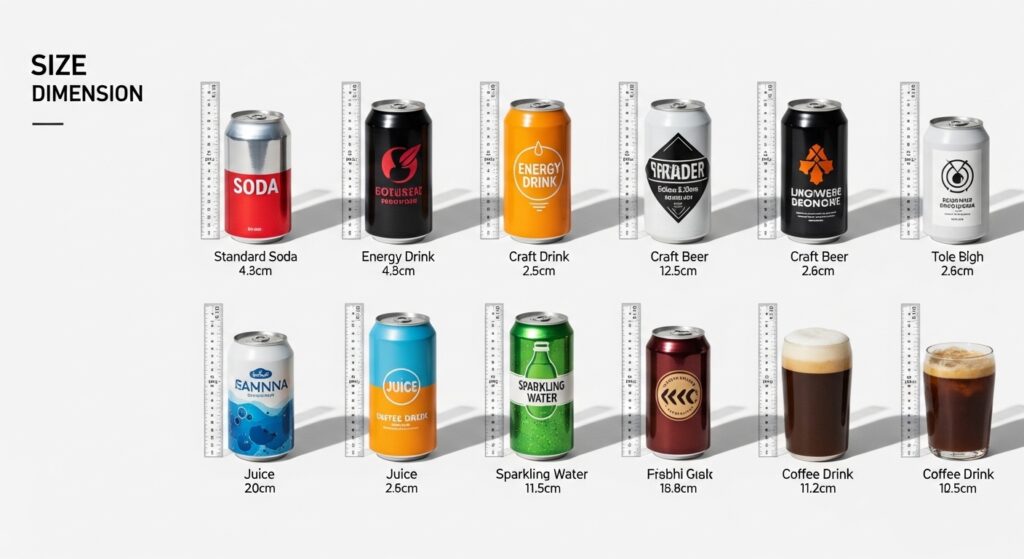
Let’s take a moment to appreciate how beverage can sizes cater to the type of drink they hold. Energy drinks like Red Bull tend to prefer the 8.4 oz (250 ml) slim can – easy to hold, easy to chug before that 3 PM slump hits.
Fruit juices and teas / herbal teas sometimes come in 12 oz (355 ml) cans, balancing volume with portability. Craft beer? Well, that’s an art form: 12 oz, 16 oz, even 24 oz cans are common, each offering a different drinking experience and ergonomic design for grip and pour.
Even ready-to-drink coffee is catching the slim-can trend. These beverages aren’t just about taste, they’re about consumer expectation. You want your caffeine in a can that feels natural in your hand, preserves flavor, and stacks nicely in your fridge. Packaging isn’t just a box, it’s an experience.
Packaging & Logistics: More Than Just a Box
You might never think about it, but a 12-pack of craft beer at 11.25 × 8.5 × 10.25 in is the result of painstaking optimization. Every pack case dimension is designed to balance stackability, transportation logistics, and shelf appeal. 6-packs, 12-packs, 24-packs – each has its own story. Did you know a 24-pack beer case is 15.7 × 10.5 × 4.8 in? That’s not arbitrary; that’s pure logistics poetry.
The shape of the can influences usability and brand perception too. Slim cans suggest sophistication, functional beverage packaging emphasizes health and performance, while stout, wide cans hint at indulgence. Resealable cans are another clever innovation, bridging convenience and freshness.
Ergonomics and User Experience
Ever held a can and felt like it was made just for your hand? That’s not magic, it’s beverage container science. Designers obsess over height-diameter correlation, finger feel, and even how the top edge interacts with your lips. There’s a subtle joy in holding a can that’s just right – not too heavy, not too light, fits snugly in your palm.
Aluminum vs steel cans also differ in tactile sensation. Aluminum feels smooth, almost cold, while steel has a reassuring heft. This sensory detail subtly influences our perception of the beverage inside. Think of it like a wine glass: the vessel shapes the experience.
Sustainability and Manufacturing: Eco Matters
In today’s world, the journey of a can doesn’t end at the beverage. Recyclability, lightweight materials, durability, and energy use in mass production all factor into the environmental footprint. Aluminum is king here – easy to recycle, low energy input for reuse. Steel requires more energy but lasts longer and resists damage in transport. Manufacturers are increasingly exploring eco-conscious packaging, ensuring that your next White Claw or Monster Energy Drink isn’t just tasty, but responsible.
Sustainability also touches packaging optimization. A 24-pack case optimized for shipping not only reduces carbon emissions but ensures that each can arrives intact, maintaining product preservation. Tiny decisions in design ripple into big environmental impacts.
Everyday Marvels of Design
It’s easy to forget that a can is a tiny engineering marvel. The volume and capacity aren’t random; a 12 oz (355 ml) can is the sweet spot for soda fizz retention. The top and bottom diameters are designed for stacking, while the shape is optimized for your hand.
Every curve, every seam, every millimeter of thickness is intentional. Even functional beverage packaging for sports drinks considers how the liquid moves inside, how carbonation behaves, and how your grip affects pouring.
I remember my uncle telling me about a factory tour of a Red Bull production line: “You see that can whiz past at 120 per minute? That’s mass production precision, my boy. One mistake, one millimeter off, and the whole line stops.” It was mesmerizing, and oddly emotional proof that even something as mundane as a beverage can can be a work of art.
How Can Dimensions Affect Marketing and Branding

Brands are very aware that the right beverage can size can drive sales. Slim cans whisper sophistication, stout cans scream indulgence. Shelf appeal is everything; a 6-pack of 16 oz craft beer catches the eye more than a 12-pack of boring 12 oz cans. Even branding placement relies on height and diameter: your logo must be readable, visually balanced, and compelling when stacked in a supermarket.
Consumer behavior is subtly influenced by these dimensions. Studies show that people perceive taller cans as more premium. Wider cans feel more “generous.” Even finger feel and hand ergonomics feed into subconscious perceptions of value and taste. Marketing is literally in the shape of the can.
Practical Tips for Choosing and Understanding Beverage Can Sizes
If you’re a consumer, a collector, or just plain curious, here’s some practical wisdom:
- Match the can size to the occasion: 12 oz for everyday hydration, 16 oz for indulgence, 24 oz for big events.
- Check end sizes if you’re stacking cans for storage 200 mm vs 206 mm makes a difference in tight fridges.
- Consider the material: Aluminum for chill, steel for heft and durability.
- Notice ergonomic design: a can that feels right in your hand enhances the drinking experience.
- Pay attention to pack case dimensions if buying in bulk it saves you from awkward trips carrying 24-packs home.
Frequently Asked Questions
monster can dimensions
A standard Monster Energy Drink can is usually 16 oz (473 ml), with a height around 6.2 in and a diameter of 2.6 in.
size of monster can inches
The typical Monster can measures approximately 6.2 inches tall and 2.6 inches in diameter.
monster can length
The length (height) of a standard Monster Energy Drink can is about 6.2 inches.
24oz can dimensions
A 24 oz can, commonly used for beer or energy drinks, is roughly 7.5 in tall with a 3 in diameter.
24 oz beer can dimensions
A 24 oz beer can typically measures 7.5 inches in height and about 3 inches in diameter, designed for Tall Boy Beer style servings.
Conclusion: Celebrating the Humble Can
Next time you pop open a Red Bull, pour a craft beer, or sip a chilled White Claw, pause for a moment. You’re holding a tiny miracle of design, logistics, and science.
From aluminum vs steel cans, to height-diameter correlation, to sustainability and recyclability, these little cylinders are everyday marvels. They connect consumer expectation, usability, and even cultural rituals around beverages.
It’s humbling and delightful to realize that something so ordinary can be extraordinary. And as you sip, stack, or collect, remember: every can tells a story – of innovation, precision, and the simple human joy of drinking something cool, crisp, and perfectly measured.

