
Have you ever held a can of soda, energy drink, or craft beer and wondered why does this feel just right in my hand? Why does Red Bull feel taller than your standard carbonated soft drink, or why does a tall boy beer almost demand two hands?
It’s not magic. It’s precision engineering, can manufacturing, and the science of beverage container design coming together in a symphony of metal and measurements. I remember the first time I peeked behind the curtain of the beverage industry:
the room smelled faintly of aluminum and sugar, and the sheer variety of aluminum beverage cans and steel (tin-plated) cans made me dizzy. But what really struck me was how every millimeter of can height, can diameter, and can end size matters both to the drinker’s hand and the retailer’s shelf.
This guide dives deep, exploring not just the numbers but the stories behind them. If you’ve ever wondered about beverage can capacities, or the subtle differences between a 12 oz (355 ml) soda can and a 16 oz (473 ml) craft beer can, you’re in the right place.
| Can Type / Beverage | Volume (oz / ml) | Height (inches / mm) | Diameter (inches / mm) | Typical End Size |
|---|---|---|---|---|
| Energy Drink (Red Bull) | 8.4 oz / 250 ml | 5.4 in / 137 mm | 2.125 in / 54 mm | 202 end |
| Standard Soda | 12 oz / 355 ml | 4.875 in / 124 mm | 2.6 in / 66 mm | 202 end |
| Tall Boy Beer | 16 oz / 473 ml | 6.2 in / 157 mm | 2.7 in / 69 mm | 206 end |
| Large Beer / Party Can | 24 oz / 709 ml | 7.625 in / 194 mm | 3 in / 76 mm | 209 end |
| Small RTD / Shot Can | 6.75 oz / 200 ml | 3.437 in / 87 mm | 2.062 in / 52 mm | 200 end |
Understanding the Basics of Beverage Can Dimensions
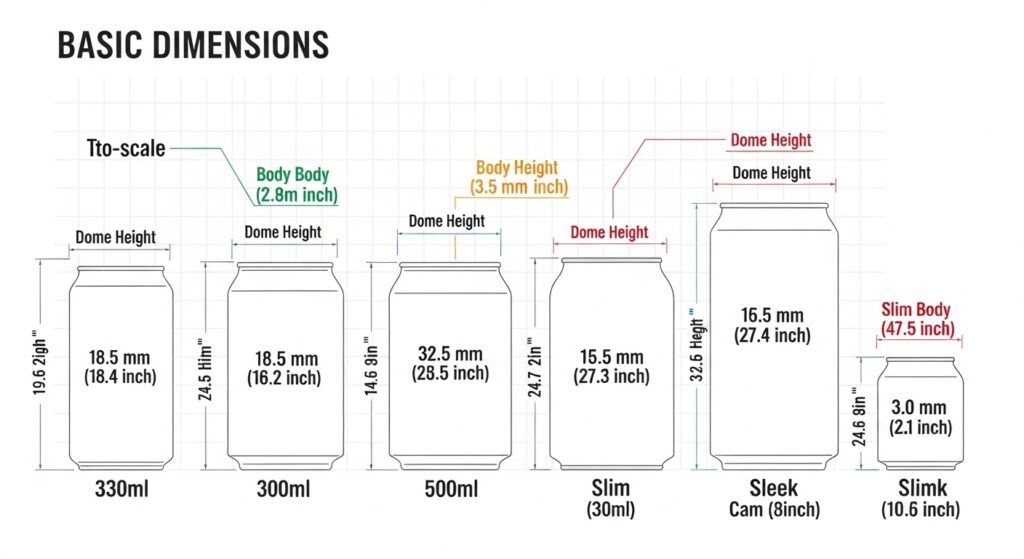
At first glance, a can might seem like a simple cylinder. But oh, it’s so much more. A standard aluminum can isn’t just a container it’s a tiny, pressurized sculpture designed for consumer ergonomics, freshness retention, and shelf appeal.
- Can height: This is the vertical measurement from base to top, often the first thing people notice. A standard 12 oz soda can measures about 4 7/8 inches (123.5 mm), whereas an 8.4 oz Red Bull can is closer to 5.4 inches (137 mm). That extra height gives it a sleek, grabby feel.
- Can diameter: Think of this as the girth. Standard soft drink cans sit around 2.6 inches (66 mm) in diameter, but tall boy beer can stretch to 3 inches (76 mm). This affects not just how it feels in your hand but how snugly it fits into a 6-pack or fridge slot.
- Can end size: Often overlooked, this is the diameter of the opening or “end” of the can. Common sizes include 200 end, 202 end, and 206 end, crucial for machinery in bottling plants and for ergonomic sip experience.
In combination, these numbers dictate everything from beverage logistics to retail shelf optimization. A can too wide might wobble in a vending machine; one too tall could block neighboring brands.
Common Beverage Can Sizes and Their Dimensions
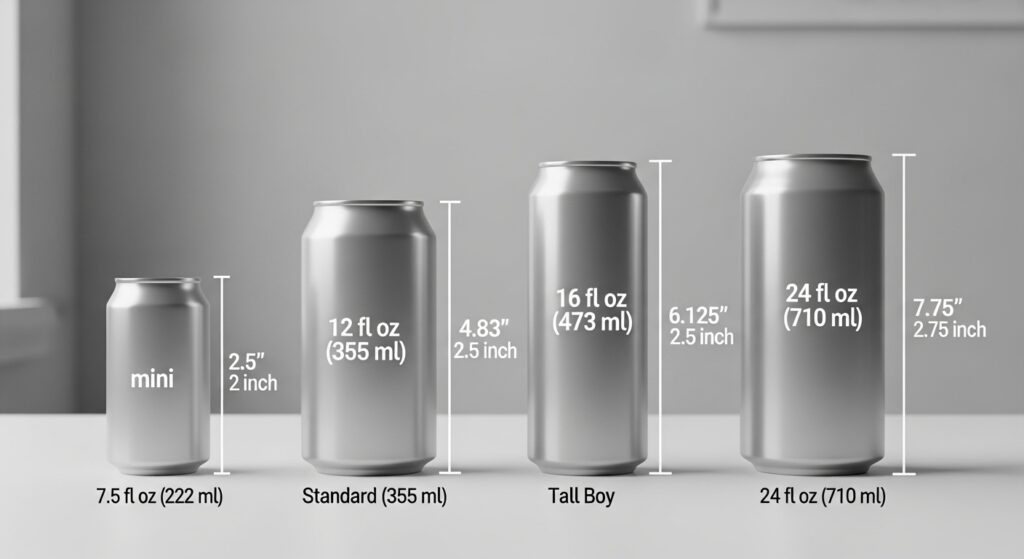
Now let’s get into the nitty-gritty of beverage can sizes. Different beverages demand different formats. Whether it’s a fizzy carbonated soft drink, a nutritional supplement drink, or a ready-to-drink coffee, the can must balance volume, grip, and visual appeal.
- 6.75 oz (200 ml): Compact, often used for energy shots or RTD beverages. Height around 3 7/16 inches, diameter 2 1/16 inches. Perfect for quick sips, portable energy, or experimental flavors.
- 8.4 oz (250 ml): Classic Red Bull size. Slender and tall with a 2 2/16 inches diameter, ideal for branding that screams “sleek and elite.”
- 12 oz (355 ml): The universal soda can. Height about 4 7/8 inches, diameter 2.6 inches. Widely used for craft beer and carbonated soft drinks.
- 16 oz (473 ml): Tall soda or beer cans, sometimes called “tallboys” in the US. Height around 6.2 inches, diameter 2.7 inches. Often used for functional beverages and malt-based drinks.
- 24 oz (709 ml): Giant cans, often for single-serve indulgence. Height near 7 10/16 inches, diameter 3 inches. Popular for beer or energy drinks that promise prolonged consumption.
Interestingly, the beverage can capacity doesn’t always align linearly with height or diameter. A slight tweak in wall thickness, tapering, or even the can end size can add or subtract a few ounces without changing the overall look.
Materials Matter: Aluminum vs Steel Cans
Ever picked up a can and thought, “Why does this feel so light?” That’s the magic of can materials. Around 75% of global beverage cans are aluminum cans, prized for being lightweight, corrosion-resistant, and highly recyclable. The remaining 25% are steel cans, often tin-plated for rust resistance, heavier, and used in niche markets like malt-based drinks or traditional carbonated beverages.
Aluminum allows thinner can walls, which saves material and energy in production, reduces shipping weight, and gives that satisfying pop when opened. Steel, by contrast, offers more rigidity, which can be important in larger beverage container designs like 3960 ml capacity party cans. In both cases, the material choice affects sustainability, consumer ergonomics, and even flavor protection.
Specialty Beverage Cans: Energy Drinks, Craft Beer, and More
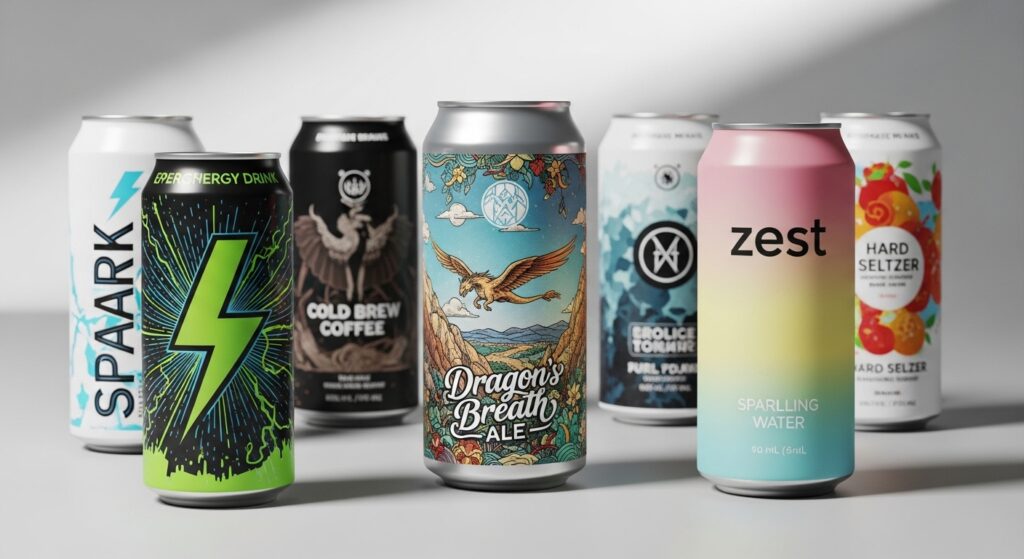
Not all cans are created equal. The beverage industry has innovated beyond the standard soda can, especially with the rise of functional beverages, RTD coffee, and energy drinks like Red Bull and Monster Energy Drink.
- Sleek energy drink cans: Typically 8.4 oz, taller, narrower, and optimized for hand feel. Marketing loves them because the size signals “premium energy.”
- Tall boys for craft beer: Often 16 oz or 24 oz, with a wider can diameter for a bolder pour. A craft beer can in this format is not just a container it’s part of the branding, giving a sense of abundance.
- White Claw and hard seltzers: Usually 12 oz, but slightly taller and lighter in diameter for a clean, minimalist look.
Even subtle differences, like can end size, can define whether a beverage is easy to reseal or fits in a cooler snugly. It’s fascinating how the user experience can hinge on a few millimeters.
Packaging Logistics and Retail Considerations
Once cans leave the factory, their dimensions dictate packaging logistics. Case sizes are carefully engineered to minimize shipping costs and maximize shelf appeal:
- 6-pack beer case dimensions: Usually compact for portability. Height and width depend on can diameter and stacking preferences.
- 12-pack beer case dimensions: Standard in grocery stores. Cans like 12 oz soda are carefully measured for snug packing.
- 24-pack beer case dimensions: Larger cases use stacking efficiency and packaging dimensions to ensure safe transport without crushing cans.
Brands also consider retail shelf optimization. A taller can might stand out visually but could waste shelf height. Shorter, wider cans fit better but might feel less premium. This is a delicate dance of beverage container measurements, shelf appeal, and transportation logistics.
Sustainability and Can Recycling
In today’s eco-conscious world, sustainable packaging is more than a buzzword. Aluminum cans are almost infinitely recyclable, retaining their quality even after multiple cycles. Can recycling reduces energy consumption drastically making aluminum a hero for eco-conscious packaging. Steel cans, while slightly heavier, are also recyclable but require more processing.
Many breweries and beverage companies emphasize recyclable cans and sustainable beverage packaging in their marketing, because the environmental footprint is part of brand influence. In some cultures, recycling even doubles as a social ritual: deposit-return systems in Europe and Japan reward responsible behavior, reinforcing the importance of can materials in everyday life.
Advanced Design Considerations in Beverage Can Dimensions
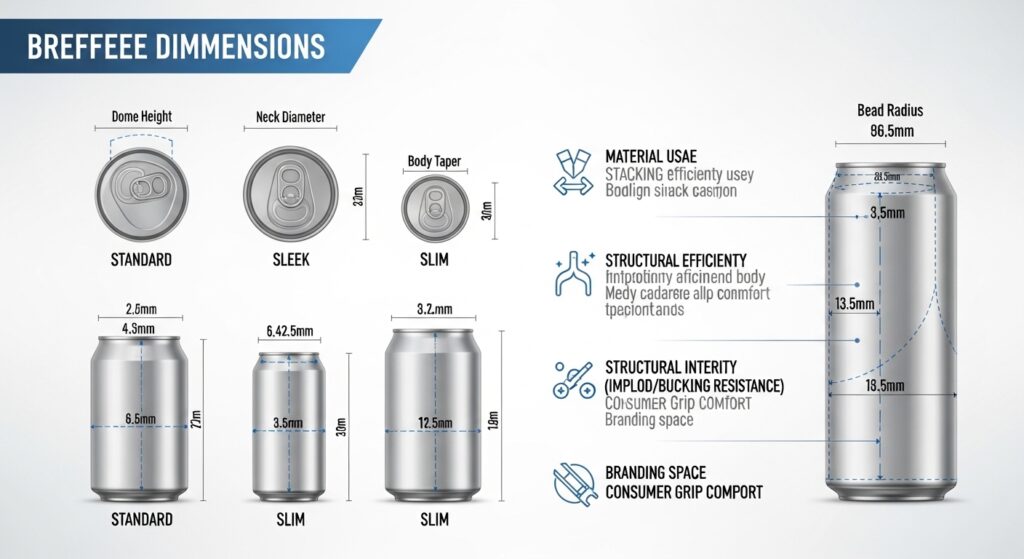
For those curious about the engineering side, a can isn’t just a cylinder with a lid. Every beverage container design is a mini-laboratory experiment in physics and chemistry:
- Can walls: Must be thin enough to save material but strong enough to resist internal pressure.
- End shapes: Domed ends handle carbonation pressure better and influence shelf stability.
- Tapering and rim designs: Affect pour rate, hand feel, and resealability.
Even something as subtle as a 202 end vs 209 end can change how a nutritional supplement drink behaves when squeezed or tilted. Engineers spend months tweaking can volume capacity, can diameter, and height to hit the sweet spot between performance, aesthetics, and cost.
Practical Takeaways: Choosing the Right Can
If you’re a consumer, the right can might seem trivial. But if you’re in beverage packaging or retail, knowing the numbers is everything. Here’s a quick takeaway list:
- Always check can height for storage compatibility.
- Consider can diameter for grip comfort and packaging efficiency.
- Don’t underestimate can end size it affects opening experience and machinery handling.
- For energy drinks and premium products, tall, slim cans convey sophistication.
- For craft beer, wider, taller cans suggest indulgence and larger volume.
- Embrace sustainable packaging to appeal to eco-conscious consumers.
- Understand packaging logistics to optimize shelf space and transport.
Frequently Asked Questions
monster can dimensions
A standard Monster Energy Drink can is 8.4 oz (250 ml) with a height of about 6.2 inches and a diameter of 2.5 inches.
size of monster can inches
The typical Monster can measures approximately 6.2 inches in height and 2.5 inches in diameter.
monster can length
The length (height) of a Monster Energy Drink can is roughly 6.2 inches.
24oz can dimensions
A 24 oz beverage can usually has a height of 7 10/16 inches, a diameter of 3 inches, and an end size of 206 mm.
24 oz beer can dimensions
A 24 oz beer can typically measures 7 10/16 inches tall, 3 inches in diameter, with an end size of 206 mm, similar to other 24 oz cans.
Conclusion: The Poetry of a Perfect Can
Next time you hold a can be it a fizzy carbonated soft drink, a functional beverage, or a chilled craft beer pause and think about the journey it’s made. From can manufacturing to retail shelf optimization, from aluminum vs steel cans to recyclable designs, every millimeter has been meticulously crafted.
A can is more than metal. It’s shelf appeal, user experience, and sustainability wrapped into a tiny, pressurized cylinder. It’s a little triumph of human ingenuity that sits quietly in your hand, fizzing, waiting to delight. And now, armed with this guide, you can appreciate not just the drink inside, but the design marvel encasing it.

