
If you’ve ever sat cross-legged on your bedroom floor, staring at a neat stack of Pokémon cards, feeling a flutter of excitement as you shuffle them, you probably know that there’s a kind of magic in these little rectangles that goes beyond just the artwork.
Pokémon cards aren’t just plastic-coated paper they’re a blend of strategy, nostalgia, and sometimes, pure obsession. But have you ever really wondered why they feel just… right in your hands?
Why Basic Pokémon or a rare Charizard Base Set card slips into your fingers with such precision? That’s the magic of card dimensions, and today, we’re diving deep like, microscopic-deep into every tiny detail that makes Pokémon cards both collectible and playable.
| Item / Card Type | Dimensions | Weight | Notes |
|---|---|---|---|
| Standard Pokémon card | 2.5 × 3.5 in (63.5 × 88.9 mm) | ~1.78 g | Standard Basic / Evolution / Trainer / Energy cards |
| Card thickness | 0.012 in / 0.305 mm | Ensures durability & shuffle feel | |
| Card corner radius | ~0.125 in / ~3.18 mm | Smooth handling, prevents bends | |
| Sleeve (Polyethylene / Polypropylene) | 2.64 × 3.58 in / 67 × 91 mm | Protects standard cards | |
| Toploader | 3 × 4 in / 76 × 101 mm | Rigid protection for rare / promo cards | |
| Booster Pack | 22–25 g | Contains multiple cards for play / collection | |
| Theme Deck / Battle Deck | 190–210 g | Complete deck for casual or tournament play | |
| Elite Trainer Box (ETB) | 280–300 g | Includes cards, dice, sleeves, guide | |
| Special Collection Box | 500–800 g | Premium collectible packs, promo cards | |
| Oversized Pokémon card | Larger than 3 × 4 in | Varies | Display or special editions |
The Standard Pokémon Card: Size Matters
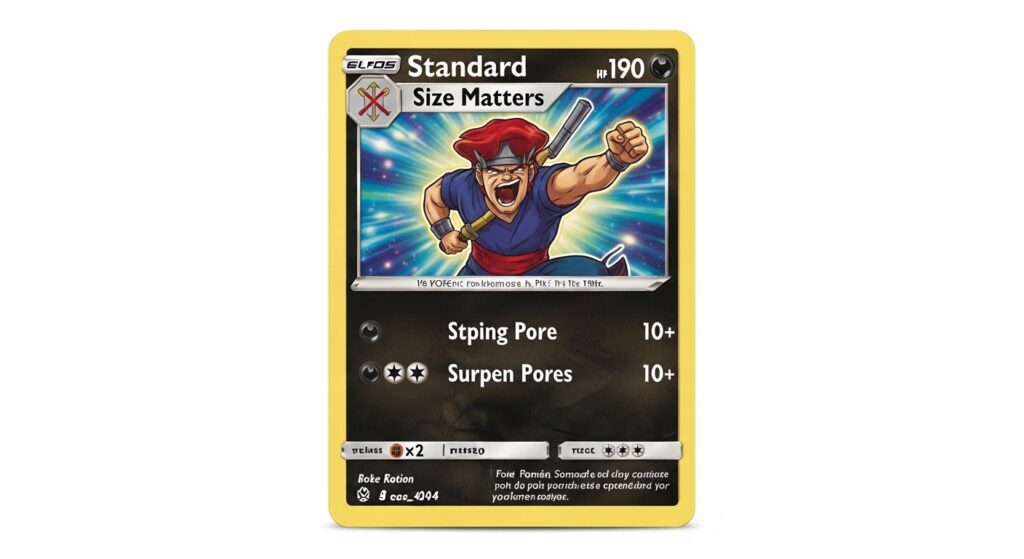
Let’s start with the basics literally. The standard Pokémon card size is 2.5 in × 3.5 in (63.5 mm × 88.9 mm). Now, you might be thinking, “meh, that’s just a rectangle,” but here’s where it gets fun: the aspect ratio is 5:7, a ratio that perfectly balances display visibility and portability.
Hold one next to a Magic: The Gathering (trading card game) card or a Yu-Gi-Oh! (trading card game) card, and you’ll notice subtle differences that affect shuffling, storing, and even how your deck “feels” during gameplay.
A card’s thickness, typically 0.012 in / 0.305 mm, may seem microscopic, but it’s essential for durability and tactile satisfaction. Too thin, and it bends or creases; too thick, and shuffling feels awkward.
Card corner radius, about ~0.125 in / ~3.18 mm, isn’t arbitrary either it ensures smooth handling, preventing those annoying sharp corners that catch sleeves or scratch your fingers.
If you weigh one in your hand, the weight of a standard Pokémon card is roughly ~1.78 g. It might seem trivial, but for collectors and players alike, weight consistency is surprisingly important it keeps deck shuffling uniform, which in tournaments or local meetups can actually make a difference.
Card Types and Their Dimensions Nuances
Now that we’re warmed up, let’s talk card types. The Pokémon TCG isn’t just about cute monsters; it’s about Basic Pokémon, Evolution Pokémon, Trainer cards, Item cards, Supporter cards, Stadium cards, and Energy cards (including Special Energy cards). Each card type shares the standard dimensions, but their design and printed elements affect their feel.
- Basic Pokémon: The backbone of any deck, usually front-heavy with stats, attacks, and abilities.
- Evolution Pokémon: These sometimes include extra visual flairs or foiling, subtly changing the card’s thickness perception.
- Trainer Cards: Sleek, often text-heavy, they feel lighter in handling because your eyes focus on the mechanics.
- Item & Supporter Cards: Similar in dimension but slightly heavier visually due to illustration density.
- Stadium Cards: When shuffled in multiples, they can affect deck flexibility due to text block density.
- Energy & Special Energy Cards: Tiny, simple, but critical like the seasoning in a gourmet meal.
Promotional cards, Oversized Pokémon cards, and special editions in a Special Collection Box can deviate from standard dimensions. For instance, oversized Pokémon cards might be larger than Toploader size: 3 × 4 in / 76 × 101 mm, often used for displays or collector’s editions, while Promotional / Special Editions sometimes boast holographic foils or embossed finishes, subtly increasing thickness.
Materials Matter: Cardstock, Sleeves, and Protection
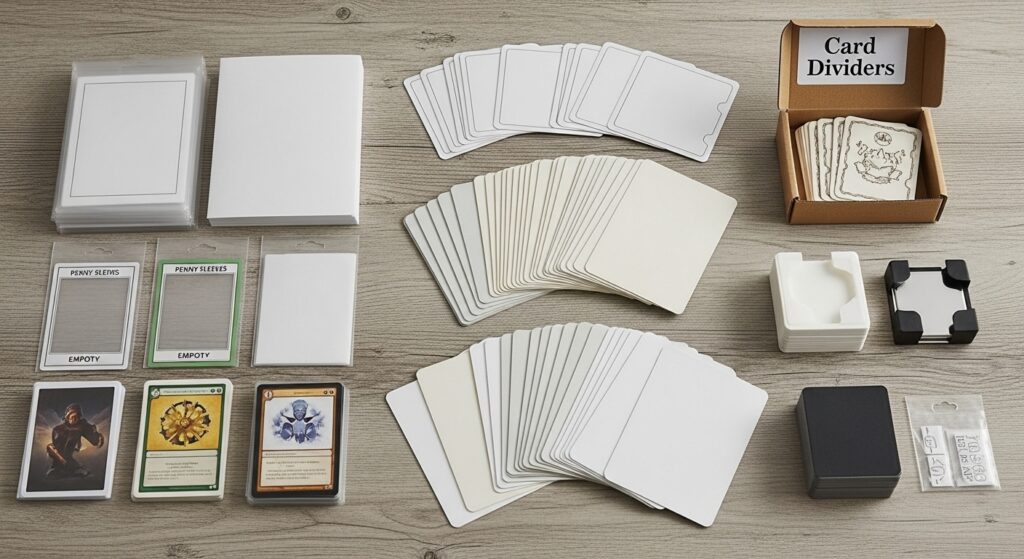
Even the perfect dimension is nothing if your card warps or fades. Pokémon cards are printed on specialized cardstock, designed for flexibility, durability, and high-fidelity art.
Collectors swear by Penny Sleeves, Premium Sleeves, Toploaders, Binder Pockets, and Deck Boxes. The choice of protective storage Polyethylene or Polypropylene sleeves affects handling, shuffling, and even long-term card health.
A sleeve size of 2.64 × 3.58 in / 67 × 91 mm is slightly larger than a standard card, providing room for ease of insertion while minimizing movement inside the sleeve. Meanwhile, Toploaders are rigid, perfect for rare gems like a Charizard Base Set, giving extra protection against bends or impacts.
Collectors often obsess over storage conditions: cool, dry, and away from UV exposure. Because even a perfectly Standardized size card can curl or fade if left in direct sunlight or humid conditions. A grandparent of a collector once told me, “the sun is like kryptonite for Pokémon,” and they weren’t kidding.
Weight Comparisons and Collector Insights
Let’s weigh some other items for context:
- A Booster Pack is roughly 22–25 g, perfect for portability in backpacks or trading with friends.
- Theme Deck / Battle Deck weight ranges 190–210 g, giving you a full deck with instructions and sometimes promo cards.
- Elite Trainer Box weight: 280–300 g, a heavy but satisfying package of cards, dice, sleeves, and energy cards.
- Special Collection Box weight: 500–800 g, usually reserved for mega collectors or gift-giving extravaganzas.
Weight and handling aren’t just for fun they affect gameplay rhythm. Shuffle a deck too light or heavy, and your strategy might feel off. Some tournaments even have rules about card uniformity for fairness.
Gameplay Implications: Decks, Shuffling, and Strategy
Card dimensions aren’t just for looks they directly affect strategy. The tactile difference between a Basic Pokémon and Evolution Pokémon can subtly cue players during shuffling or draws. A well-sleeved Stadium card might slide perfectly during a fast-paced tournament, while poorly protected Energy cards could stick or warp.
Think about elemental types: Water, Fire, Grass, Electric, Psychic each type might favor different deck construction strategies. Handling and shuffling can influence how quickly you access critical cards, like using Trainer cards for card draw or support.
Collectors and players alike debate: do holographic or foil cards shuffle differently? Anecdotal evidence suggests yes slightly stiffer foil cards can alter shuffle feel, which is why some players keep them separate or in their Elite Trainer Box (ETB) or Deck Box.
Market Value and Community Insights

Dimensions also impact collector value. Slight variations, bends, or corner imperfections reduce market value, while pristine Promotional / Special Editions or Charizard Base Set cards can fetch astronomical prices. Authenticity matters counterfeit cards often mimic size, but weight and cardstock differences can betray them.
Community engagement thrives around these details. Local meetups, tournaments, and online forums often discuss card feel, storage tips, and rare finds. Auctions can hinge on minor dimension anomalies or protective sleeve choices.
And the joy of trading? There’s nothing like discovering a rare Holographic card sliding into your hand just right, feeling the exact ~1.78 g weight and knowing your collection just leveled up.
Display, Portability, and Long-Term Care
When it comes to showing off your collection, display and visibility are key. Binder pockets, Toploaders, and display boxes allow for aesthetics while maintaining protective standards. Some collectors even match Card Types by size, weight, and artwork to create visually harmonious spreads.
Portability is another factor. Standard dimensions allow you to carry decks in backpacks, Elite Trainer Boxes, or even themed sleeves without worrying about misfits. But remember: always keep humidity, sunlight, and bend risks in mind tiny tweaks in storage conditions can warp even a perfectly Standard Pokémon card size card.
Frequently Asked Questions
What is the standard size of a Pokémon card?
The standard Pokémon card size is 2.5 × 3.5 in (63.5 × 88.9 mm), designed for optimal shuffling, handling, and display.
How thick are Pokémon cards?
Most cards have a thickness of 0.012 in / 0.305 mm, providing a balance of durability and flexibility.
What protective sleeves should I use for my cards?
Polyethylene or Polypropylene sleeves sized 2.64 × 3.58 in / 67 × 91 mm work best to prevent bending or damage.
Do oversized or special edition cards follow the standard dimensions?
No, Oversized Pokémon cards and Promotional / Special Editions are larger or heavier for display and collectible purposes.
Why does card weight matter in gameplay?
Card weight, around ~1.78 g per card, affects shuffling, deck consistency, and the tactile feel during tournaments or casual play.
Conclusion: Why Dimensions Are the Hidden Hero
It’s easy to overlook the tiny details: the 0.305 mm thickness, the 3.18 mm corner radius, the 5:7 aspect ratio but these are what make Pokémon cards the perfect blend of collectible art and strategic gameplay.
From Booster Packs to Special Collection Boxes, from Basic Pokémon to Evolution Pokémon, every dimension is intentional, every weight considered, every material chosen to optimize durability, shuffling, and aesthetic pleasure.
So next time you hold a Trainer card or an Item card, notice how it fits your hand, how it shuffles, how it slips perfectly into a Premium Sleeve. Share stories with friends, trade in local meetups, or just admire your holographic gems safely stored away. Pokémon cards aren’t just paper they’re tactile memories, strategy tools, and collectible treasures all in one.
And if you’re inspired to customize your own storage or make a personal card display, remember: even small tweaks in sleeve choice, binder alignment, or ambient storage conditions can preserve your cards’ beauty for decades. Pokémon card dimensions are more than measurements they’re part of a cultural phenomenon, a community, and a game that brings joy across generations.

