
Ever thought about how a simple water bottle can be kinda like a secret companion in your daily chaos? I mean, yeah, it’s just a container for liquid… but it’s more than that, isn’t it? The one you grab for your morning hike or toss into your gym bag kind of tells a story about you.
And, lemme tell ya, if you’re not paying attention to water bottle dimensions, you could be carrying around something awkwardly heavy or too tiny to actually keep you hydrated.
Yup, that happens more than you think. So today, we’re gonna wander into the world of bottles plastic, stainless steel, tiny, ginormous, tall, squat, all of it. And i promise, we’ll have fun while learning some legit facts too.
| Capacity | Height (in / cm) | Diameter (in / cm) | Typical Weight (g) | Notes |
|---|---|---|---|---|
| 237 ml (8 oz) | 5.5 in / 14 cm | 2.25 in / 5.7 cm | 10–15 (plastic) | Travel / small bag |
| 355 ml (12 oz) | 7 in / 17.8 cm | 2.5 in / 6.4 cm | 15–20 | Kids / desk use |
| 500 ml (16.9 oz) | 9 in / 23 cm | 2.75 in / 7 cm | 20–25 | Everyday / cup holder |
| 591 ml (20 oz) | 10 in / 25.4 cm | 3 in / 7.6 cm | 25–30 | Gym / school |
| 1 L (33.8 oz) | 11.5 in / 29 cm | 3.5 in / 8.9 cm | 250 (stainless) | Hiking / outdoor |
| 1.5 L | 12 in / 30.5 cm | 3.75 in / 9.5 cm | 300–350 | Long outings / beach |
| 2 L (67.6 oz) | 12.5 in / 31.8 cm | 4 in / 10.2 cm | 400–450 | Maximum hydration |
Understanding Water Bottle Sizes: Why Dimensions Matter
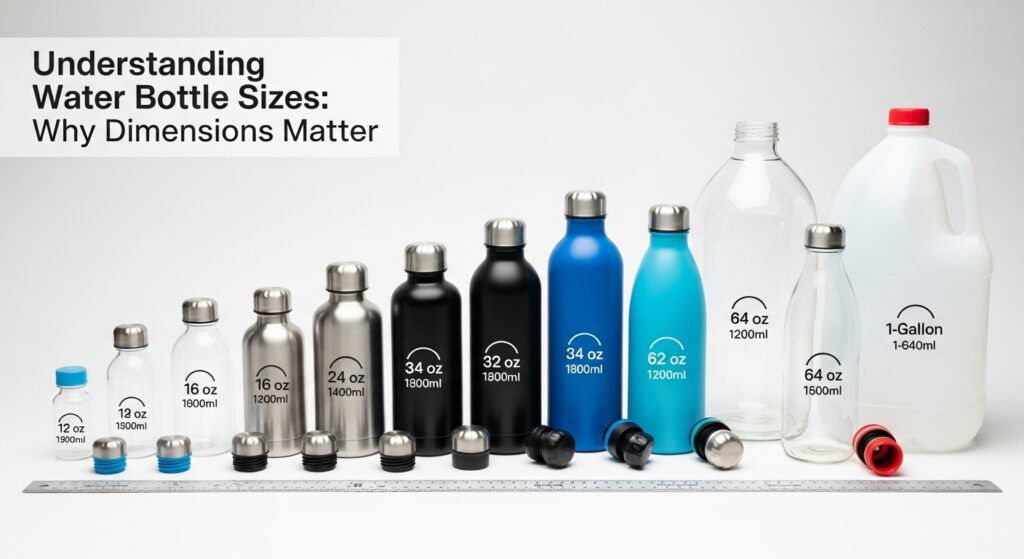
Ok so first things first—size isn’t just a number, it’s a lifestyle choice. The height, diameter, and capacity of your bottle decide if it fits in your bag, your car cup holder, or even in your kid’s lunchbox. Most people just eyeball it, grab something cute at the store, and then… surprise! It doesn’t fit anywhere. Been there.
Let’s break it down:
- Small bottles (237–355 ml / 8–12 oz) Think mini, travel-friendly, cute as heck. They barely weigh anything, usually 10 15 g if plastic, 200 g if stainless steel empty. Perfect for a 20-minute walk, or keeping your hydration game in check during a short class.
- Medium bottles (500–591 ml / 16.9–20 oz) The everyday go-to. Fits car cup holders, school backpacks, or that side pocket of your hiking pack. Height’s usually 9–10 in (23–25 cm), diameter 2.5–3 in (6.4–7.6 cm). Feels just right without being awkward.
- Large bottles (1–1.5 L / 33.8–50 oz) Gym bros, hikers, and anyone trying to reach that magical 2 L daily water intake these are your champs. They’re taller (12–12.5 in / 31–32 cm) and wider (3.5–4 in / 8.9–10.2 cm). Full? Heavy as heck, but you’ll stay hydrated for hours.
- Extra large bottles (2 L / 67.6 oz) Weekend warriors, beach lovers, or that one cousin who forgets to refill for days these bottles are giants. Carrying one is basically a workout in itself.
And a little pro tip: if your bottle is too narrow, it might be easy to spill. Too wide, and suddenly it’s like carrying a mini keg. Dimension matters, my friends.
Plastic Water Bottles vs Stainless Steel Bottles: The Size Trade-Off
Not all bottles are made equal. Material changes everything weight, durability, and even how fast your drink heats or cools.
- Plastic Water Bottles: Lightweight, flexible, cheap. Empty weight ~10–15 g. Can crush if you’re careless, but perfect for kids’ lunchboxes or daily commuting. Cap sizes often 28–33 mm, easy for screw-on lids or flip tops. If you’re a gym person, these are quick, disposable, convenient. Just avoid leaving them in a hot car… science says not great for the plastic.
- Stainless Steel Bottles: Heavy-duty champs, empty weight ~200 g. Keep your water icy cold or piping hot for hours. Popular outdoor activities buddies. More expensive, but if you love long hikes or beach outings, worth it. Diameter slightly bigger to accommodate insulation, so check your cup holder before buying.
Height and diameter vary more in stainless steel bottles than plastic. A 500 ml plastic bottle might be 9 in (23 cm) tall, but a 500 ml stainless steel could be 10 in (25.4 cm) because of thicker walls.
Standard Water Bottle Dimensions: A Visual Guide
Ok, let’s get nerdy for a sec. Standardization exists for a reason. You want portability, cup holder compatibility, and an easy way to estimate your daily water intake. Here’s the quickie guide:
| Capacity | Height (in/cm) | Diameter (in/cm) | Typical Weight (g) | Notes |
|---|---|---|---|---|
| 237 ml (8 oz) | 5.5 in / 14 cm | 2.25 in / 5.7 cm | 10–15 (plastic) | Mini, travel |
| 355 ml (12 oz) | 7 in / 17.8 cm | 2.5 in / 6.4 cm | 15–20 | Kids, office desk |
| 500 ml (16.9 oz) | 9 in / 23 cm | 2.75 in / 7 cm | 20–25 | Everyday use, cup holders |
| 591 ml (20 oz) | 10 in / 25.4 cm | 3 in / 7.6 cm | 25–30 | Gym bag favorite |
| 1 L (33.8 oz) | 11.5 in / 29.2 cm | 3.5 in / 8.9 cm | 250 (stainless) | Hiking, outdoor |
| 1.5 L | 12 in / 30.5 cm | 3.75 in / 9.5 cm | 300–350 | Long hikes, beach day |
| 2 L (67.6 oz) | 12.5 in / 31.8 cm | 4 in / 10.2 cm | 400–450 | Max hydration, weekend trips |
Visualizing these helps—imagine a small 237 ml barely peeking over your hand versus a 2 L bottle that’s basically a mini pillar.
Bottle Caps & Openings: More Than Just a Lid
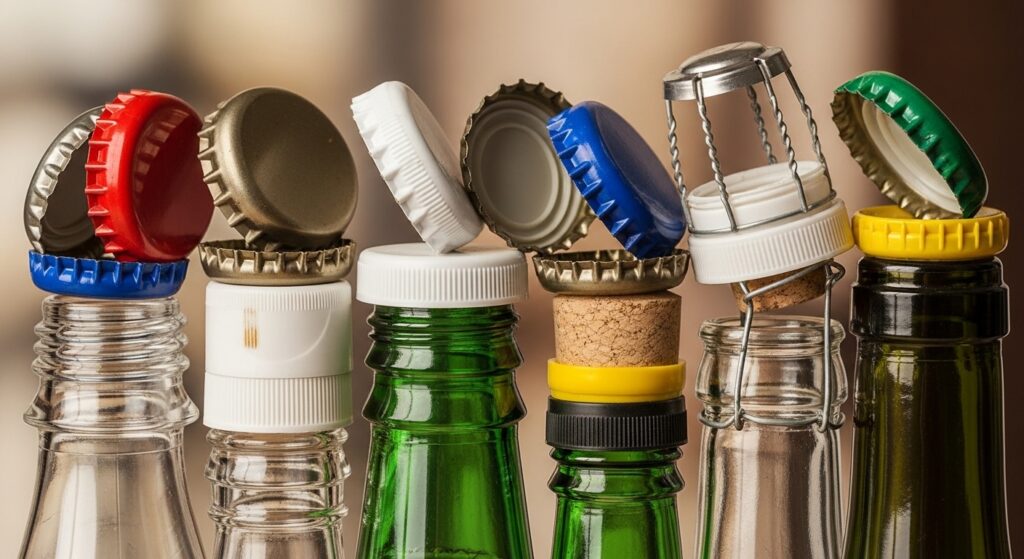
Don’t underestimate the bottle cap. Size, shape, and design can make or break your hydration experience.
- Screw caps (28–33 mm) Standard on plastic and stainless bottles, leak-proof if tightened, but slower to open.
- Flip tops / sports caps Fast, convenient for gym or biking, but sometimes leaks if dropped.
- Straw lids Kids love ‘em, super convenient for school lunchboxes. Pro tip: always check cap compatibility with your bottle’s diameter.
Small dimension differences here make a huge impact. Imagine a 33 mm cap on a 500 ml bottle perfect. Now slap it on a 2 L bottle? Struggle city.
Portability & Ergonomics: How Dimensions Affect Daily Use
Here’s where numbers start to meet real life. A 1.5 L stainless steel bottle looks cool, but try squeezing it into your gym bag with your sneakers, water shoes, and sweaty shirt. Height, diameter, and weight all decide whether your bottle is your hydration hero or a pain in your back.
- Commuting Medium bottles (~500 ml) fit in most car cup holders. Heights ~9 in / 23 cm, diameters ~2.75 in / 7 cm. Perfect for avoiding spills while driving.
- Hiking / Outdoor activities Go for 1–2 L bottles with sturdy caps. Thick walls mean slightly taller, heavier, but they last all day. Some people even attach a carabiner to a bottle cap loop for easy hanging.
- Gym Lightweight, mid-size, easy to grab. Plastic bottles dominate here. Consider height to fit in side pockets of gym bags.
- Kids / Lunchbox Short, squat bottles. Easy to open, leak-proof, fits snugly in small compartments.
Ergonomics matter. A 2 L bottle in a tiny backpack? Nope. A 355 ml bottle that slips out of your hand while jogging? Ouch.
Practical Examples & Conversion Facts
Sometimes you just need the quick math, ‘cause carrying two bottles when one suffices? That’s unnecessary drama.
- 500 ml = 16.9 oz
- 1 L = 33.8 oz
- 1.5 L = 50 oz
- 2 L = 67.6 oz
Height conversions? No prob: 10 in ≈ 25.4 cm, 12.5 in ≈ 31.8 cm. Super handy if you’re shopping overseas.
Weight matters too: a full 500 ml plastic water bottle ~500 g. Same size stainless steel ~680 g. See why gym bags feel heavier sometimes?
Special Shapes & Design Considerations
Not all bottles are cylindrical (yawn). Some are flat, square-ish, collapsible. Shapes affect:
- Bag storage Flat bottles save space.
- Portability Slim, tall bottles for cup holders.
- Grip Ergonomic contours, rubber sleeves.
Some designs even let you pour easily into smaller cups without spilling. Clever, huh?
Making the Most of Your Water Bottle Dimensions
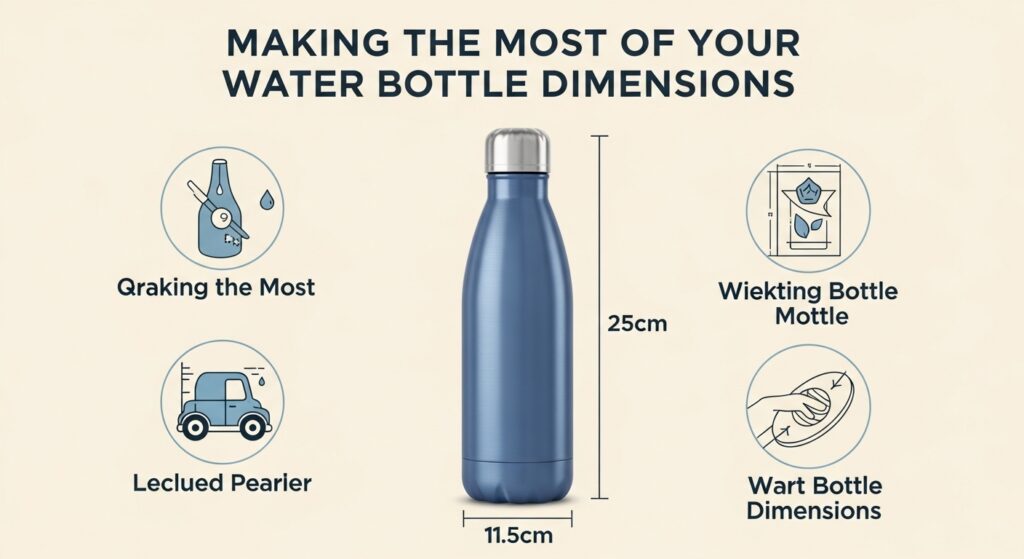
Now that you’ve got the nerdy details, how to actually use this info?
- Pick capacity based on your daily water consumption. Adults ~2–3 L/day, kids ~1–1.5 L.
- Check height & diameter for where you’ll store it. Desk? Backpack? Gym bag?
- Consider material based on usage. Outdoor adventure? Stainless steel. Gym? Plastic.
- Don’t ignore cap compatibility. Flipping, twisting, straws all matter.
- Visualize weight. A full 2 L bottle is heavy. Can you carry it comfortably?
And hey, keep it fun. Decorate, label, personalize. A water bottle is kinda like your portable hydration BFF it deserves some personality.
Frequently Asked Questions
how many inches is a water bottle
Most standard water bottles range from 8 to 12 inches in height, depending on capacity and design.
how long is a water bottle
A typical water bottle’s length is usually 8 to 12 inches, with larger bottles sometimes reaching 16 inches.
how tall is a 16.9 oz water bottle
A 16.9 oz (500 ml) water bottle is generally 8 inches (20 cm) tall.
how much water is in a plastic water bottle
A standard plastic water bottle typically holds 16.9 ounces (500 ml) of water, while larger bottles can hold up to 2 liters (67.6 oz).
how many inches is a bottle of water
Standard bottles measure roughly 8 to 12 inches, depending on size and type.
Read this Blog: https://nexovates.com/how-big-2mm/
Conclusion: Dimensions That Make Life Simpler
So, next time you grab a bottle, remember it’s not just a bottle. It’s a portable hydration toolkit, a mini convenience machine, a silent companion for your daily hydration, hiking, gym, or kids’ lunchbox adventures. Height, diameter, capacity, weight, material they all matter more than we give credit for. Think about your lifestyle, pick wisely, and suddenly hydration becomes effortless, not annoying.
And if you wanna get nerdy like me, try measuring your favorite bottle: height in cm, diameter in in, convert ml ↔ oz. You might even start noticing how much water you drink vs how much you should. Mind-blowing little life hack, honestly.
Remember: whether you’re sipping a tiny 237 ml bottle while on a zoom call, or hauling a 2 L giant up a mountain, the right dimensions make it feel like it was made just for you. Stay hydrated, friends. Your bottle’s waiting.

